Image Source: Katie Jameson (via Pintrest)
There's a moment in Autumn - usually somewhere in April on the Sunshine Coast - when the air shifts. The humidity of Late Summer finally eases, the mornings feel crisper, and something in the body exhales. It's a relief after the thick, wet heaviness of February and March.
But Autumn brings its own challenges. As the season dries out, so can we. Dry throat. Dry skin. A tickly cough that lingers. Lips that need constant balm. In Chinese medicine, this isn't coincidence, it's seasonal physiology.
Autumn and the Lungs: Why Dryness Is the Issue
Autumn belongs to the Lung and Large Intestine — the organs of the Metal element. The Lung in Chinese medicine is responsible for far more than breathing: it governs the skin and the body's outermost defensive layer (Wei Qi), regulates fluids in the upper body, and descends moisture downward through the system.
When the Lung is well-nourished and the season is kind, everything feels easy: the skin is supple, the throat is clear, breathing is full and deep. But when external dryness invades — particularly in Autumn — the Lung is the first to feel it.
Signs of Lung dryness in Chinese medicine include:
Dry, scratchy or sore throat
A dry cough - especially one that lingers after a cold
Dry, tight or sensitive skin
Constipation (the Large Intestine needs moisture too)
Dry nasal passages and sinuses
A sense of mild sadness or wistfulness - the emotional tone of the Lung season
The antidote, in both Chinese dietary therapy and simple common sense, is moisture. And few foods do this job better than the pear.
Why Pears Are the Star of Autumn in Chinese Medicine
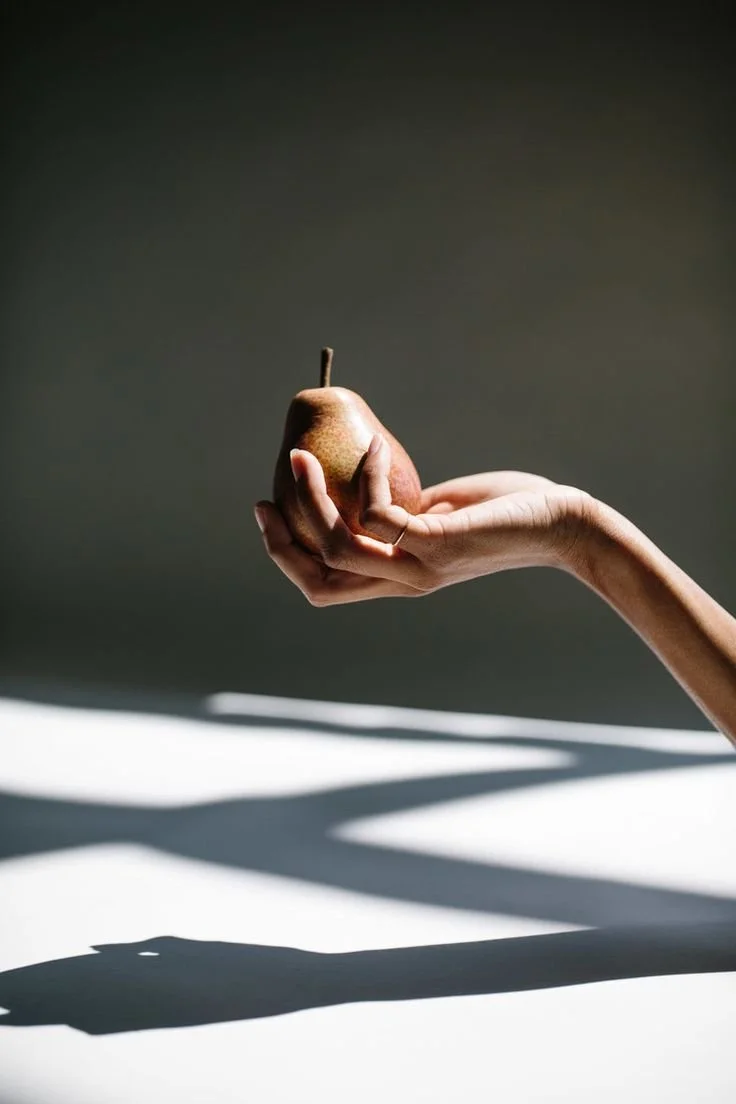
Pears have been used as food medicine in Chinese culture for thousands of years. In Chinese dietary therapy, the pear is considered cooling in nature, sweet and slightly sour in flavour, and specifically targeted at the Lung and Stomach channels.
What this means in practical terms:
Pears moisten the Lungs - making them the go-to food for dry cough, sore throat, and respiratory dryness
They clear Lung heat - useful when dryness tips into inflammation (think: a burning, irritated throat)
They nourish Stomach Yin - supporting digestion and fluid production in the gut
They gently move fluids downward - helping with constipation linked to dryness
In Chinese medicine, pears are often cooked rather than eaten raw in Autumn — particularly for people with a sensitive digestion. Cooking the pear (poaching, steaming, or baking) makes it easier to digest while preserving and even enhancing its moistening properties. The gentle warmth of the cooking process also means you're not sending cold food into a body that's beginning to contract as the cooler weather arrives.
Enter: Star Anise, Cinnamon and Honey
This is where the recipe gets interesting - because every ingredient here is doing medicinal work, not just making things taste good.
Star anise warms the middle, moves Qi, and supports digestion. It has a beautiful, slightly liquorice warmth that complements the pear's sweetness without overwhelming it.
Cinnamon bark (rou gui) is one of the great warming herbs of Chinese medicine. In small amounts as a food, it warms the Kidney Yang, supports circulation, and helps the body make use of the nourishment it receives. It also has a well-established role in blood sugar regulation.
Ginger (we've added a little to the recipe) is the Lung and Stomach's best friend in cooler weather — it warms, it moves, and it protects against the cold pathogens that love to sneak in through the nose and throat in Autumn.
Honey moistens, soothes, and harmonises. In Chinese medicine it is specifically indicated for Lung dryness and dry cough — it is literally one of the foods prescribed for the same condition the pear addresses. Together, they are a powerful duo.
When to Eat This (and Who It's Best For)
This recipe is lovely as a light dessert, a warming breakfast, or an afternoon snack on a cool Autumn day. It keeps well in the fridge for up to five days - make a big batch on Sunday and eat it through the week.
It's particularly good for:
Anyone with a dry, tickly cough or lingering throat dryness
Those with dry or sensitive skin as the weather changes
People prone to constipation — especially the dry, pellet-like kind
Anyone who tends to run warm and finds heavier warming foods too much
Children - it's gentle, sweet, and universally loved
If you tend toward a cold constitution, feel chilled easily, or have a lot of digestive bloating, pair this with a warming ginger tea rather than eating it cold from the fridge.
A Note on Eating Seasonally
Chinese medicine has always understood what modern nutritional science is slowly catching up to: eating in season is one of the most powerful things you can do for your health. The foods that ripen in Autumn are almost invariably the foods that support the Lung and Large Intestine. Pears, apples, daikon radish, garlic, white mushrooms — all of them, in their own way, moisten, protect, and prepare the body for winter. When we eat with intention, thoughtfully, seasonally, with awareness of what the body needs right now we are practising the most ancient form of preventive medicine there is. Food is our first and best medicine!
At Indigo Chinese Medicine, we weave dietary therapy into every treatment plan. Food isn't an afterthought, it's part of the medicine. If you'd like to understand more about what your body needs this Autumn, we'd love to help.
Recipe: Spiced Honey Poached Pears 🍐
A Chinese medicine food therapy recipe for Autumn dryness
Serves 4 | Prep 10 min | Cook 25 min
Ingredients
4 ripe but firm pears (Beurré Bosc or Packham work beautifully)
3 cups water
3 tablespoons raw honey (ideally local). Add after cooking if you want to preserve its properties - see note.
2 whole star anise
1 true cinnamon stick
3 slices fresh ginger (about the size of a 50 cent piece)
1 strip lemon peel
Pinch of sea salt
To serve (optional)
A dollop of plain yoghurt or coconut cream
A drizzle of extra honey
A light dusting of ground cinnamon
Method
Peel the pears and halve them lengthways, leaving the stems on if you can — they look beautiful. Scoop out the core with a teaspoon.
Combine the water, star anise, cinnamon stick, ginger, lemon peel, and salt in a saucepan wide enough to hold the pears in a single layer. Bring to a gentle simmer over medium heat.
Add the pears cut-side down and simmer on low heat for 20–25 minutes, turning gently halfway through, until they are just tender when pierced with a skewer. Don't rush this — a low, slow simmer is the way.
Remove the pears with a slotted spoon and set aside. Increase the heat and reduce the poaching liquid by half until it thickens into a light syrup (about 10 minutes).
Remove from heat, stir in the honey, and pour the warm syrup over the pears.
Serve warm or at room temperature with a dollop of yoghurt and an extra drizzle of honey.
A note on honey: Raw honey loses some of its beneficial properties above 40°C. If you're using good quality raw honey and want to preserve its medicinal value, stir it in after removing the pan from the heat. It will still sweeten and flavour the syrup beautifully.