Image Source: dabsndtabs.tumblr.com
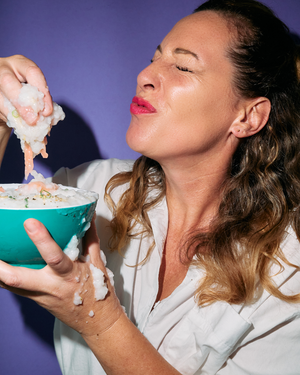
Ever wondered why it was called men-o-pause? Don’t worry, I’m not about to get all feminist on you. Going through “the change” myself I’ve noticed a shift from externalising validation to really standing in my own power, loving myself first, kind of not giving two hoots what other people think (in a loving way of course).
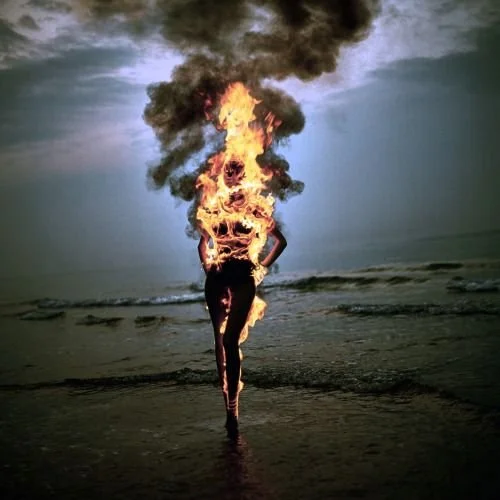
Something to do with the heat I’m feeling makes me feel really powerful.
That is, until the sleep started getting interrupted. My blood pressure rises far too quickly. My face, back, chest and legs sweat now.
What Chinese Medicine says about Menopause
Interestingly, menopausal syndrome was rarely mentioned in ancient Chinese medical texts. We speculate this is because women, for thousands of years, carefully managed their periods and postpartum recovery - meaning that through their menstruating years, the state of blood and Qi was finely regulated. The transition was simply... smoother.
Here's my take: perimenopause is just code for "you're upgrading, and it's time to deal with all the stuff you've been ignoring”. This include treating your uterus like the precious gem it is.
In some esoteric circles, the womb is where we store unprocessed emotion, carrying the lineage of our female ancestors. There are some extraordinary womb healers out there, and from my own experience, this organ is far more than a monthly inconvenience.
Menopause as a Golden Transition - not a fade out
Menopause is so often spoken about as though a woman is somehow fading out. This is grandiosely wrong.
Chinese culture acknowledges three transformative "golden transitions" in a woman's life: menarche, childbirth, and menopause. Each is an opportunity to upgrade into something more powerful. I mean, pushing a baby the size of a watermelon into the world is sheer heroism.
All the heroism aside, the weight gain really sucks.
But maybe that's just a spotlight on what's been quietly sliding - the regular exercise, the indulgences (I've always loved my food). If we're going to age gracefully and healthily, this is a brilliant moment to give it a real push to realign and balance before everything spirals to the point of very difficult return. There’s nothing like creeping up a size or two to inspire 10,000 steps a day and swapping cookies for protein snacks (or better still — protein cookies!).
Blood, Qi and Hormones: The Chinese Medicine View of Menopause
In Chinese medicine, we don't talk hormones. We talk about imbalance of blood, Qi, Yin and Yang. The Kidneys and their extraordinary ability to house our constitutional energy - our Jing - are always flagged in perimenopause. But they're not the only contributor. Blood plays a central role in women's health; our entire cycle is governed by its waxing and waning. Disharmonies with blood are at the root of perimenopause and the bumpy hormonal transition many women experience.
I don't know about you, but pathologising menopause and supplementing with oestrogen - bio identical or not - to recreate a faux fertile state doesn't sit right with me. Sticking synthetic compounds in the body so blood test results make everyone breathe a sigh of relief isn't the answer either.
What we need to do is what we always do in Chinese medicine: listen to what the body is telling us, and respond by supporting women so they can move through this transition with greater ease.
What Does the Research Say? Acupuncture and Chinese Medicine for Menopause
Acupuncture has been increasingly studied as a supportive treatment for menopausal symptoms, particularly vasomotor symptoms (VMS) like hot flushes and night sweats.
A review of randomised controlled trials found acupuncture effective in reducing menopausal symptoms, improving vasomotor symptoms, and enhancing quality of life. Another randomised controlled trial found acupuncture produced a clinically meaningful reduction in hot flushes and menopausal symptoms, with some sustained benefit observed at follow up. Systematic reviews have also found acupuncture to be comparable and in some studies more effective — than hormone therapy for menopause related symptoms, with fewer side effects reported.
Systematic reviews have also found acupuncture to be comparable - and in some studies, more effective - than hormone therapy for menopause-related symptoms, with fewer side effects reported.
Chinese herbal medicine has similarly shown promise in improving menopausal symptoms and quality of life, though researchers note more high-quality studies are still needed.
While the research is still evolving, the evidence supporting Chinese medicine in menopause care continues to grow particularly around symptom management, sleep, nervous system regulation and quality of life.
Ready to Support Your Menopause Transition Naturally?
My strong recommendation: start pre- or peri- menopause care early. If you're already in the thick of it, we can absolutely work with that too.
At Indigo Chinese Medicine, treatment is focused not just on symptom suppression, but on supporting the whole person - nervous system, sleep, digestion, energy, mood and hormonal transition, naturally.
Your body isn't fading. It's transforming. Let's make that transition as smooth as possible.